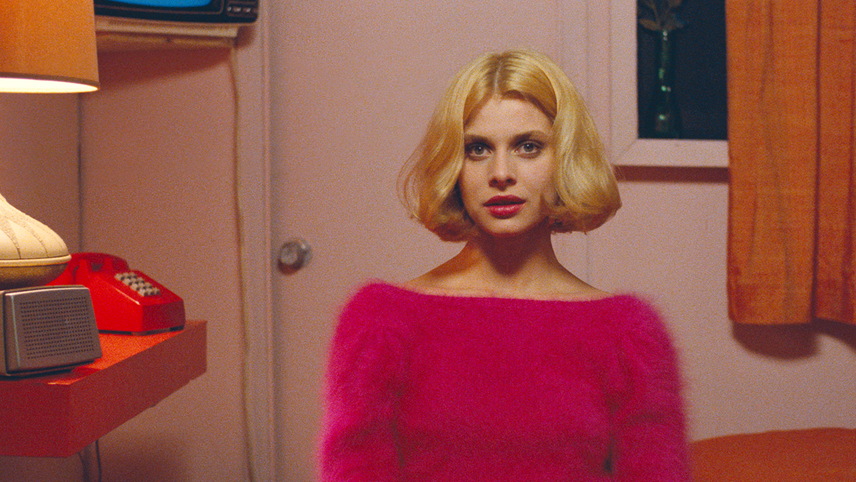
There is a film that will make you say the thing you did.
Not to anyone. Not out loud. Not in a conversation or a letter or a therapist’s office. You’ll say it to yourself, in the quiet after the credits, in the specific voice you reserve for truths you’ve been keeping in third person.
Because that’s the trick, isn’t it? The thing you did, the real thing, the one that broke something that stayed broken, you’ve been telling yourself about it in third person for years. It happened. Things fell apart. We grew apart. It didn’t work out. The passive voice. The disappearing subject. The grammar of someone who wasn’t there when it happened, even though you were the one who made it happen.
Paris, Texas is going to move that story from third person to first. You will not enjoy the translation. But you will recognize it as accurate, and that recognition is the thing the film leaves behind.
A man is walking through the Texas desert. He has no water, no identification, no explanation. His name is Travis Henderson and he has been missing for four years. His brother, Walt, comes to collect him. Travis barely speaks. He looks like a man who has been erased from his own life and is not yet sure he wants to be written back in.
The film gives you almost no information about where he’s been or why he left. This absence is not a mystery to be solved. It is the film’s first act of precision. Because the question is not where Travis went. The question is what he’s walking away from, and Wenders knows that you already understand walking away. You understand the impulse to simply leave, to become no one, to trade the unbearable specificity of what you’ve done for the anonymous blankness of a desert.
You have your own version. Maybe not a desert. Maybe a city, or a job, or a new relationship, or a version of yourself so thoroughly remodelled that the person who did the thing barely exists anymore. You’ve been walking too. The film sees you walking.
Travis has a son. Hunter. The boy has been living with Walt and his wife for four years, growing up in a house that is kind and stable and not his. Travis returns and tries to be a father again, and this is where the film begins its work on you, because Wenders does not play this as redemption. He plays it as awkwardness.
Travis picks Hunter up from school and doesn’t know where to stand. He walks behind the boy, not beside him, maintaining a distance that is physically unnecessary and emotionally exact. He is a man who knows he forfeited the right to walk beside his own child, and his body remembers even if his words don’t.
You will watch this and feel something in your posture shift. Because you know this distance. You’ve kept it. With a friend you wronged and then saw at a party. With a family member you hurt and now talk to in a voice that is polite and friendly and not quite real. With anyone who knew the version of you that did the thing, and whose presence reminds you that the thing was done and that you are the one who did it.
Travis walks behind his son. You’ve been walking behind someone too.
Then the film takes you to the peep show booth, and everything changes.
Travis finds Jane, his ex-wife, working in a place where men talk to women through a one-way mirror. The man can see the woman. The woman cannot see the man. They communicate through a phone. The man is hidden. The woman is exposed.
Travis sits down. He picks up the phone. And he tells her what happened.
He tells it in third person.
He tells her a story about a man and a woman who were in love, and the man became jealous, and the jealousy turned into control, and the control turned into something worse, and one night there was a fire, and the man walked into the desert and kept walking.
He tells it as though it happened to someone else. And slowly, sentence by sentence, the third person collapses. “He” becomes “I.” The story stops being about a man and starts being about Travis. And Jane, on the other side of the glass, recognizes his voice. And she turns off her light so that the mirror reverses, and now she can see him and he can’t see her, and the two of them sit there, separated by glass, telling each other the truth for the first time.
I need to stop here and tell you what this scene does. Not what it means. What it does.
It will make you feel the physical weight of a confession you haven’t made.
Not a legal confession. Not the kind that involves wrongdoing in any courtroom sense. The kind that involves a phone call you should have made five years ago. A sentence that starts with “I was the one who” and never gets past the first few words because the first few words are already too heavy.
You have a one-way mirror. Everyone does. It’s the structure you built so that you could look at the damage without being seen inside it. The rewritten history. The version of events where things happened but nobody in particular made them happen. The careful, third-person architecture of a life that has been edited for comfort.
Travis sits in the booth and dismantles his. Plank by plank. He does not ask for forgiveness. He does not explain. He simply says what he did, in sequence, until the third person can no longer hold the weight and the “he” becomes “I” and the mirror flips and he is visible.
The film will ask you, in the silence after this scene, whether you’re ready to flip yours.
You probably aren’t. That’s fine. The question doesn’t expire.
What separates Paris, Texas from every other film about guilt is that it does not offer absolution. Travis tells the truth. Jane hears it. And then Travis leaves. He drives his son to Jane’s door, watches the reunion from the car, and drives away.
This is not a happy ending. It is not a sad ending. It is the ending of a man who understands that the thing he broke cannot be repaired by his presence, that the most loving thing he can do is deliver what he took and then remove the source of the damage, which is himself.
You will feel two things simultaneously when this happens, and they will be contradictory, and the film will not help you resolve the contradiction.
You will feel that Travis is right. That some wreckage is best cleaned up by the person who caused it stepping away. That there is a kind of love that expresses itself as permanent absence, and that this is not cowardice but the most expensive form of responsibility.
And you will feel that Travis is wrong. That leaving again is just another version of the desert. That the hardest, bravest thing would be to stay, to be visible, to live inside the discomfort of being the person who did the thing and still show up for breakfast.
Wenders gives you both readings and closes the film before you can choose. You will spend years choosing. Some mornings you’ll choose one. Some evenings you’ll choose the other. The film doesn’t care which you pick. It only cares that you stop pretending the choice doesn’t exist.
Eternal Sunshine offered you erasure and then took it back. Paris, Texas doesn’t even offer. There is no clinic, no procedure, no technology that can undo what Travis did. There is only the desert he walked into and the booth he sat down in and the glass between two people who loved each other and were destroyed by that love in the specific, irreversible way that only people who love each other can manage.
The difference between the two films is the difference between losing someone and ruining someone. Gondry’s film is about loss. Wenders’ film is about damage. Loss can be grieved. Damage has to be confessed. And confession, the film insists, does not repair. It only clarifies. It tells the truth about the shape of the hole so that everyone can stop pretending the hole is a different shape than it is.
A warning.
Do not watch this film if there is someone you owe a conversation to and you are not yet ready to have it. The film will not force you to have the conversation. But it will make the not-having-it feel different. Heavier. More chosen. You will no longer be able to tell yourself you simply haven’t gotten around to it. You will know, after Travis sits in that booth, that not getting around to it is a decision, and that the decision has a shape, and that the shape looks like a man walking through a desert alone.
Do not watch it if you have children and have ever been less than you should have been for them. The walking-behind scene is calibrated with surgical specificity to find the exact distance you’ve kept, and it will measure that distance in a unit of measurement you cannot argue with: the space between your body and theirs.
Watch it if you are ready to hear your own story in first person. Not to act on it. Not to fix anything. Just to hear it in the correct grammar, in your own voice, without the glass between you and the truth.
Ry Cooder’s guitar will stay with you. It sounds like heat and distance and a road that goes in one direction. It sounds like a man who is too far away from something to reach it and too close to stop walking toward it. You will hear it in your car, weeks later, in the silence between songs, and you will know exactly what it means and you will keep driving.
There is a piece of land in Paris, Texas. Travis bought it because that’s where his parents first made love. He’s never seen it. He carries a photograph of the empty lot in his pocket. The entire film is a man walking toward a place that means everything and contains nothing.
You have a Paris, Texas. A place, or a moment, or a person that means everything and contains nothing because you emptied it yourself. The film will not take you there. It will simply make you aware that you’ve been carrying the photograph all along.
First person. Present tense. That’s where the film leaves you.
What you do next is yours.